Authored by Kim Slezak, Nebraska Forest Service
On the heels of multiple pulp and sawmill closures throughout the country, last fall USDA Forest Service (Forest Service) Chief Tom Schultz requested the convening of partners, collaborators, industry, finance, and policymakers to ferret out a plan. A plan where we could all work together to sustain, strengthen, and build markets for small-diameter and low-value wood fiber coming out of the woods. For if there are no markets, there is no management.
The U.S. Endowment for Forests and Communities partnered with the Society of American Foresters to host the Markets Matter Convening, with event facilitation by the Keystone Partners. The three entities formed a stellar steering committee to put together an outstanding event.
This convening was focused on developing actionable steps to expand and strengthen markets for small-diameter and low-value wood fiber. Among the 200-plus attendees were five members of the Council of Western State Foresters (CWSF) Forest Products Committee (FPC). Dave Bruton (KS), Archie Gray (ID), Marc Vessar (MT), and myself, as well as our State Forester Advisor, Jeremy Douse (AK), participated.
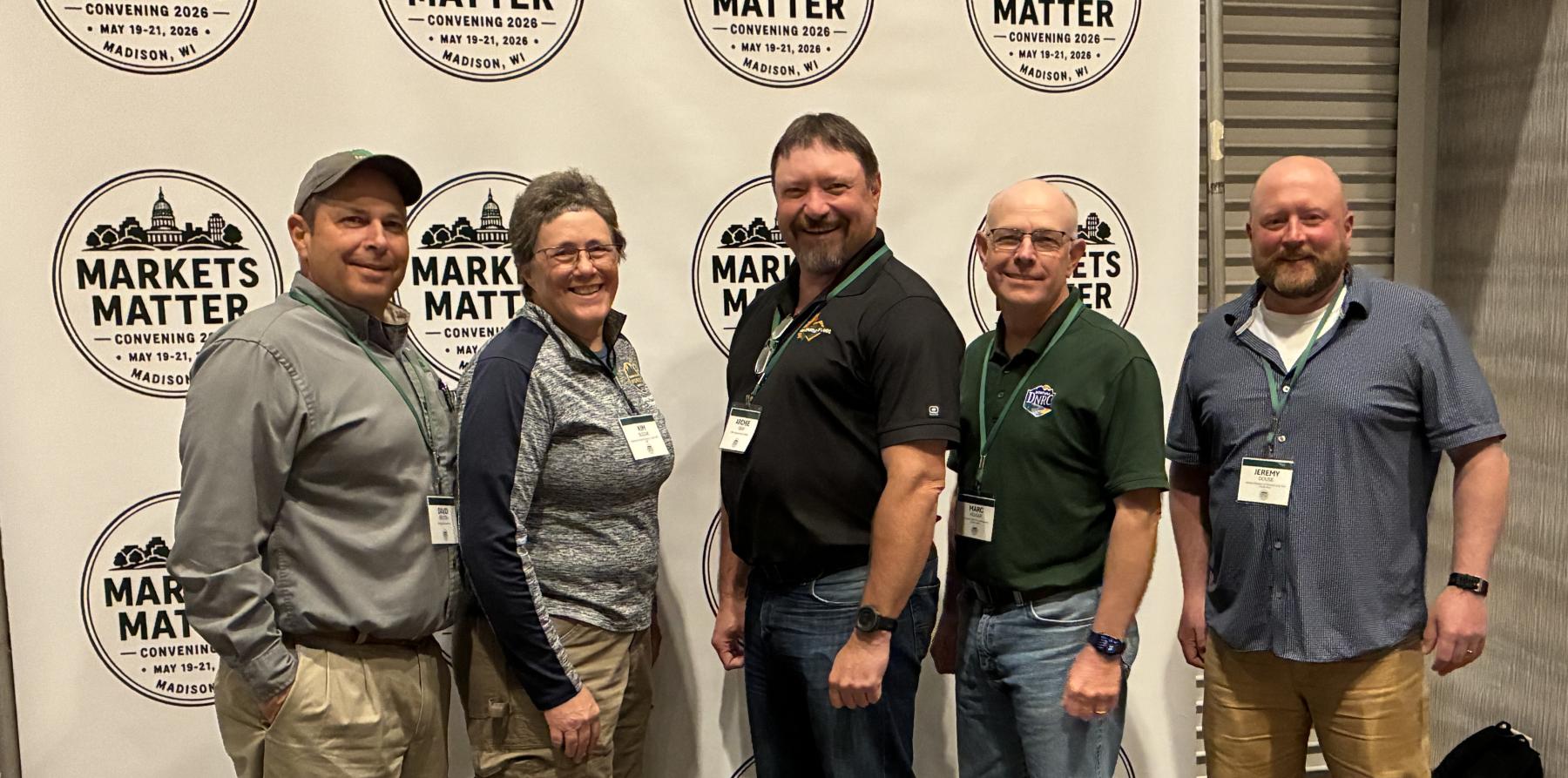
We all felt a hand in the convening, as the Markets Matter Steering Committee used the CWSF Ponderosa Pine Action Plan as a springboard, taking it to the next level. Archie stated that he really felt like we accomplished something at the convening. He felt the Endowment built on the Ponderosa Pine Summit by taking the lessons learned and further advancing them. They were able to bring in a larger, more diverse group, and they took the things that we did that worked well and expanded on them.
The objective of the convening was to “Identify practical actions to build markets in small-diameter wood, manufacturing residues and residual wood fiber.” Other key defining statements for the discussion included: “Healthy forests require healthy industry, and healthy industry depends on viable markets” and “Markets matter because forests and communities depend on them.”
In the breakouts, Archie found we were able to dig into current issues and discuss potential solutions. In the groups he was in, they talked about policy changes to maintain and enhance bi-product markets for infrastructure, specifically by fast-tracking the renewable fuels standard definition and including all biomass from all forests. Attendees discussed whether it should be a Renewable Energy Standard instead of a Renewable Fuels Standard.
We are facing a national issue. Marc commented that the Markets Matter Convening provided an opportunity to work with professionals representing a variety of forest products from across the country, all pulling in the same direction to help active forest management achieve economic feasibility.
A few of the ideas shared included stacking benefits to get a better value for results of forest management/hazardous fuels projects, which include ecosystem services, quantifying wildlife response benefits, available clean water, and unrealized costs – such as for every $1/acre spent on forest management, a savings of $3.60 - $7/acre is saved in suppression costs.
In his presentation titled “Residual Wood Fiber, Small-Diameter Timber, & the Reality of U.S. Forest Products Markets”, Roy Anderson with the Beck Group shared that 56 million bone dry tons (BDT) per year goes unutilized between sawtimber, pulpwood, logging slash, and mill residues.
Here in Nebraska, most fiber from hazardous fuels projects is not utilized. Roy noted that “the central challenge is not how much wood the forest can produce, but how effectively markets, technologies, and institutions are aligned to use it” and that “durable utilization occurs when markets, feedstocks, logistics, and operating conditions align.”
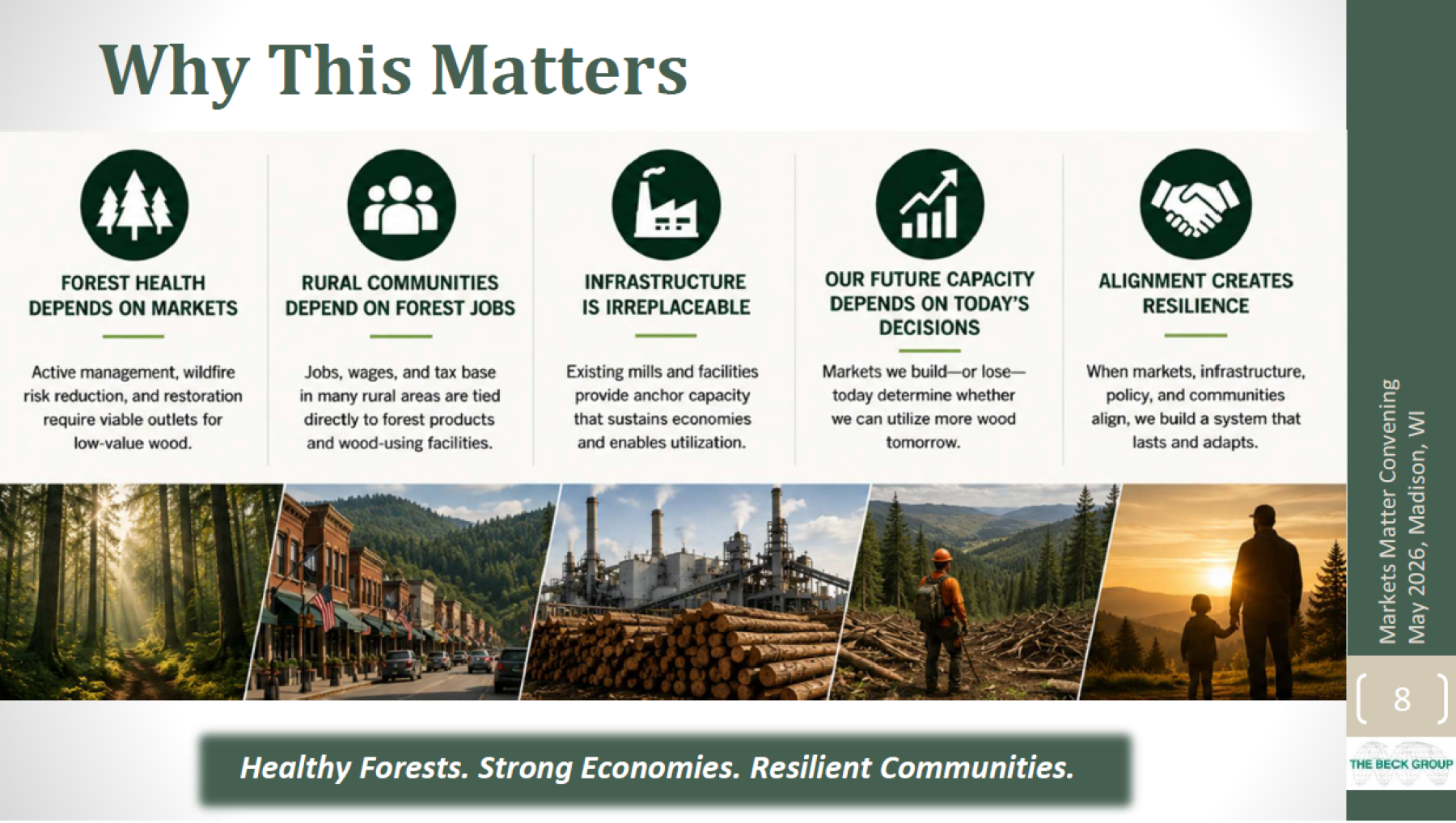
Attendees had the opportunity to visit the Forest Products Lab and learn more about ongoing projects and efforts. Dave thought the diversity of participants from across the country added to the discussion, and the convening provided the chance to network and visit with potential partners.
The FPC is looking forward to the release of the Markets Matter Action Plan and continued engagement with every link in the supply chain, as well as current and new manufacturing and market opportunities, policymakers, and financial interests in all those parts. None of us can solve this alone. There was energy at the convening, generated by so many like-minded professionals joining together to build and be part of the job ahead - implementing the action plan.
The FPC works to support sustainable forest management, the forest industry, and communities. Committee members help to inform the CWSF membership about issues and opportunities for leadership action. Membership of the FPC includes foresters, forest product, utilization, and marketing specialists from 17 western states and six U.S.-Affiliated Pacific Islands, as well as a State Forester Advisor and a CWSF Staff Liaison. The USDA Forest Service is a critical partner and integral participant in committee events.
Learn more about the FPC.